IAAC MaAI Programme, Barcelona · Sep–Dec 2024
Problem
After a major earthquake, analysts manually map collapsed buildings and blocked roads from satellite imagery for disaster response teams. The process is slow and must be repeated each time new imagery arrives — costing critical time when routing decisions affect lives. The 2023 Turkey earthquake provided a direct real-world dataset to build and evaluate against.
My Contribution
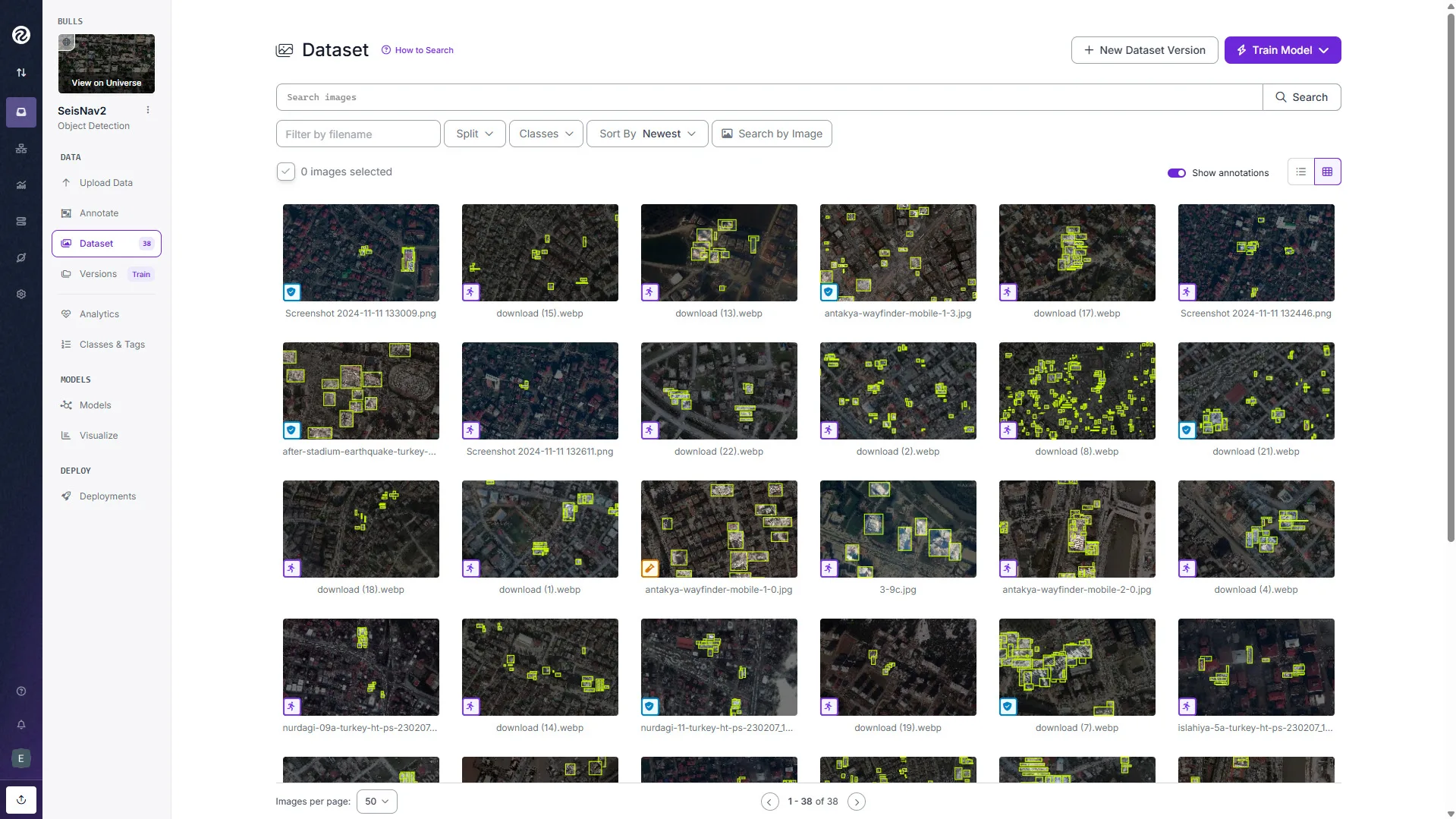
I annotated the satellite imagery dataset (MAXAR Technologies, post-2023 Turkey earthquake data) for model training across five damage classes, contributed to model configuration decisions, and built the adaptive routing engine that uses ML-derived collapse masks to calculate safe navigation paths via Mapbox GL JS and Turf.js.
Technical Approach
Dataset: Post-earthquake MAXAR satellite imagery, manually annotated across five damage classes. Six model configurations were trained and evaluated across annotation methods, preprocessing pipelines, and augmentation parameters to identify what actually moved the needle on mIoU.
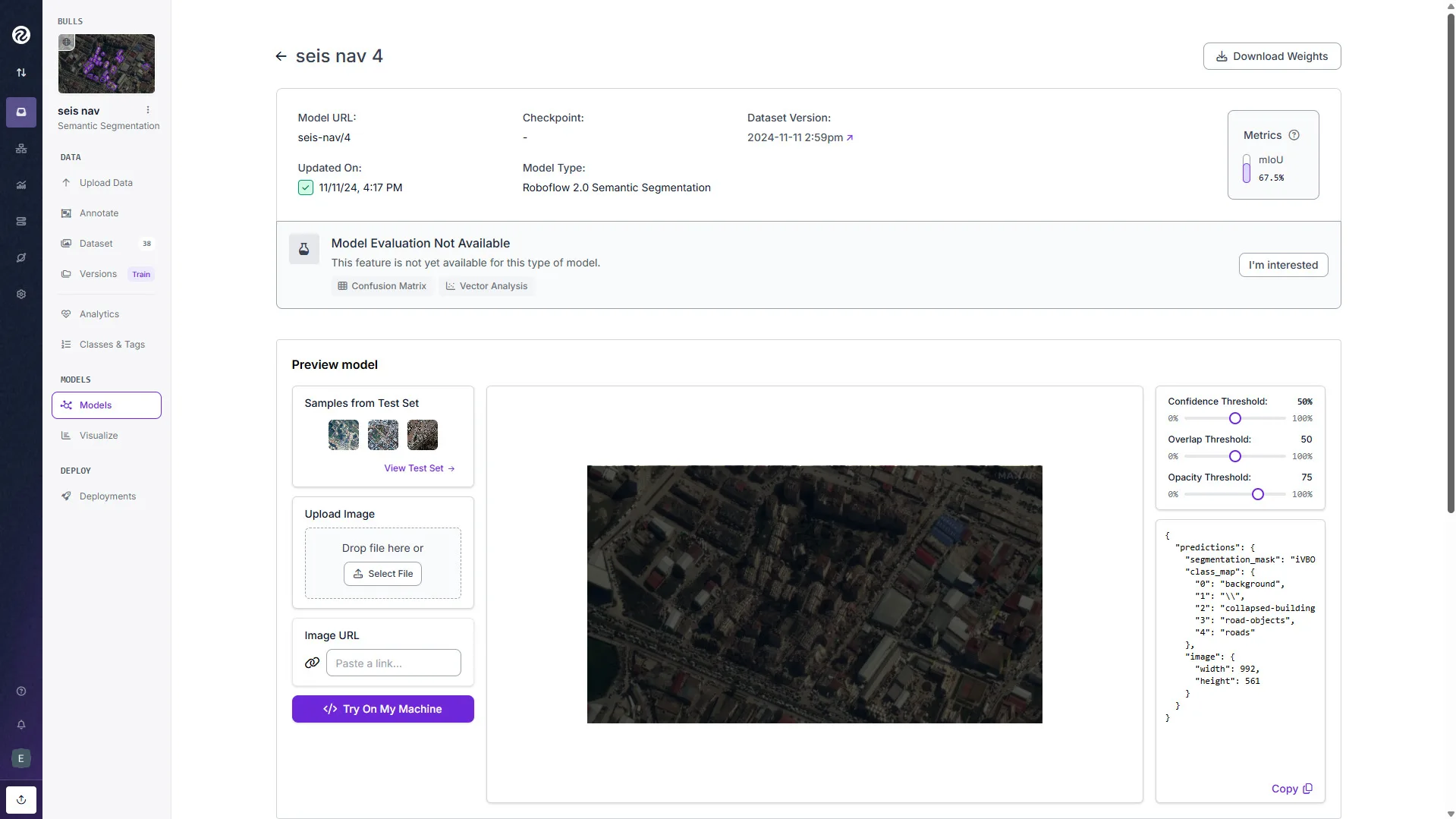
Model: Semantic segmentation trained via Roboflow. The final model achieves 67.5% mIoU on collapsed building detection — a meaningful result on a domain where labelled data is inherently noisy and post-disaster imagery contains complex debris patterns across varying lighting and resolution conditions.
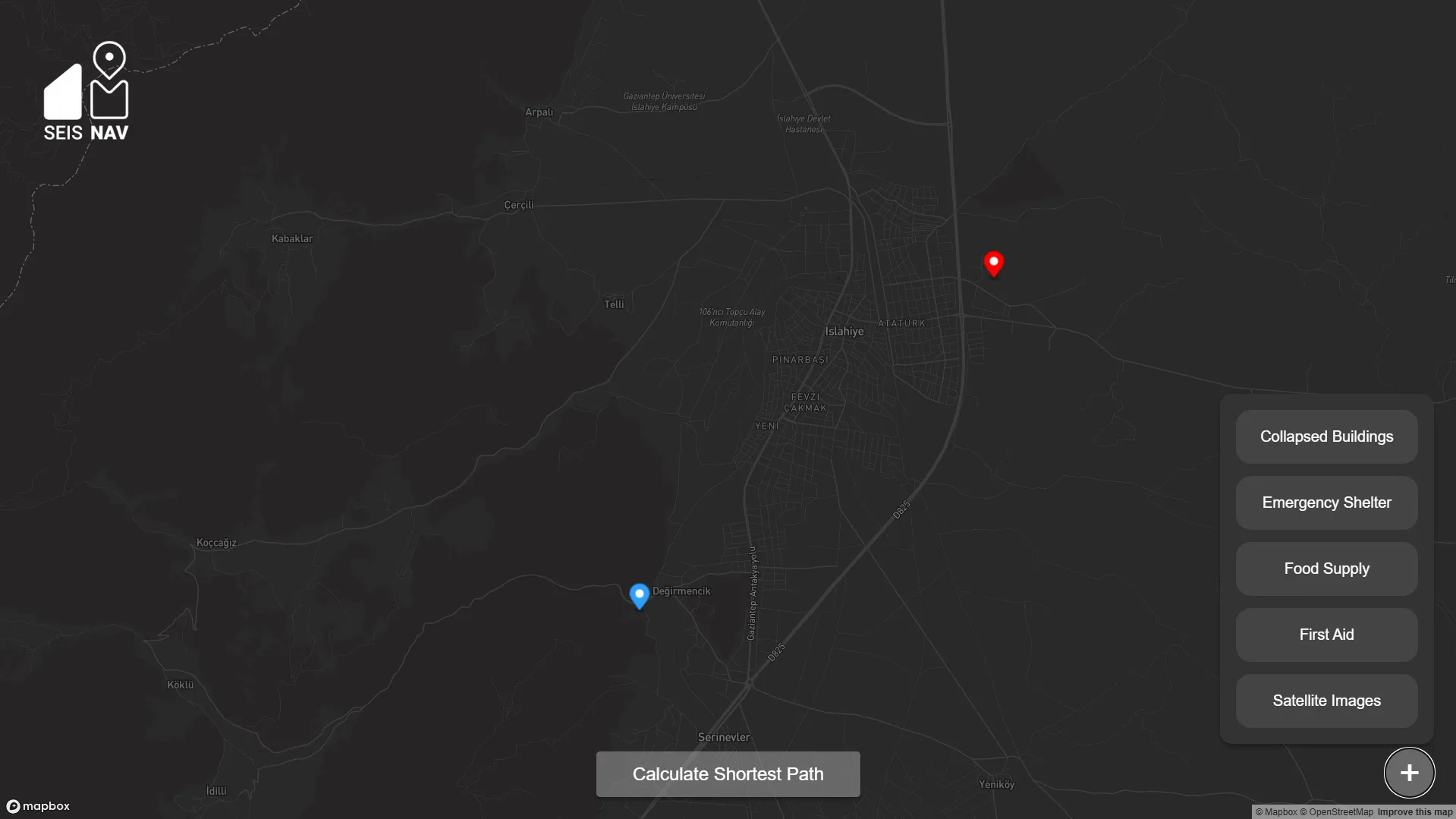
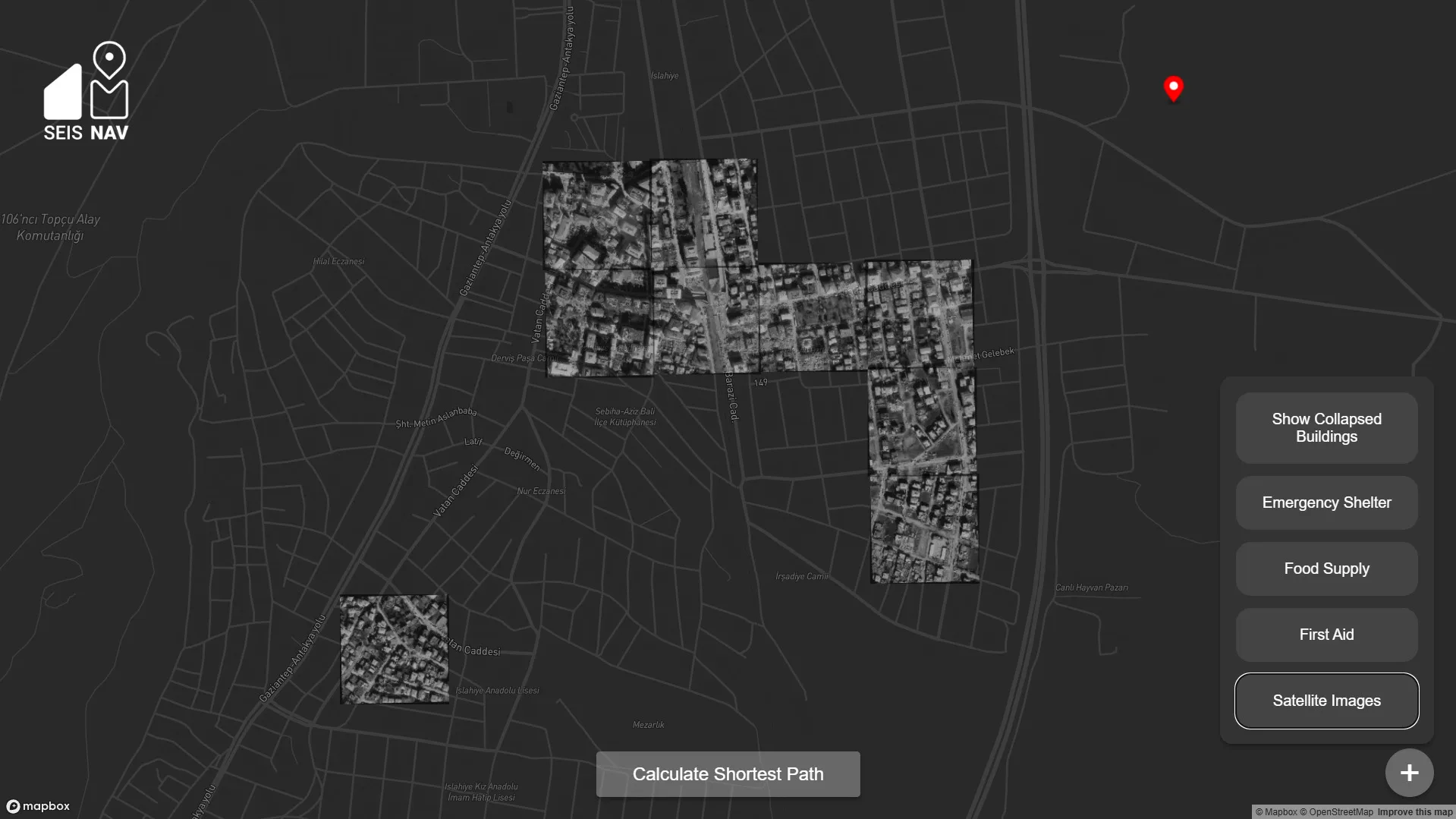
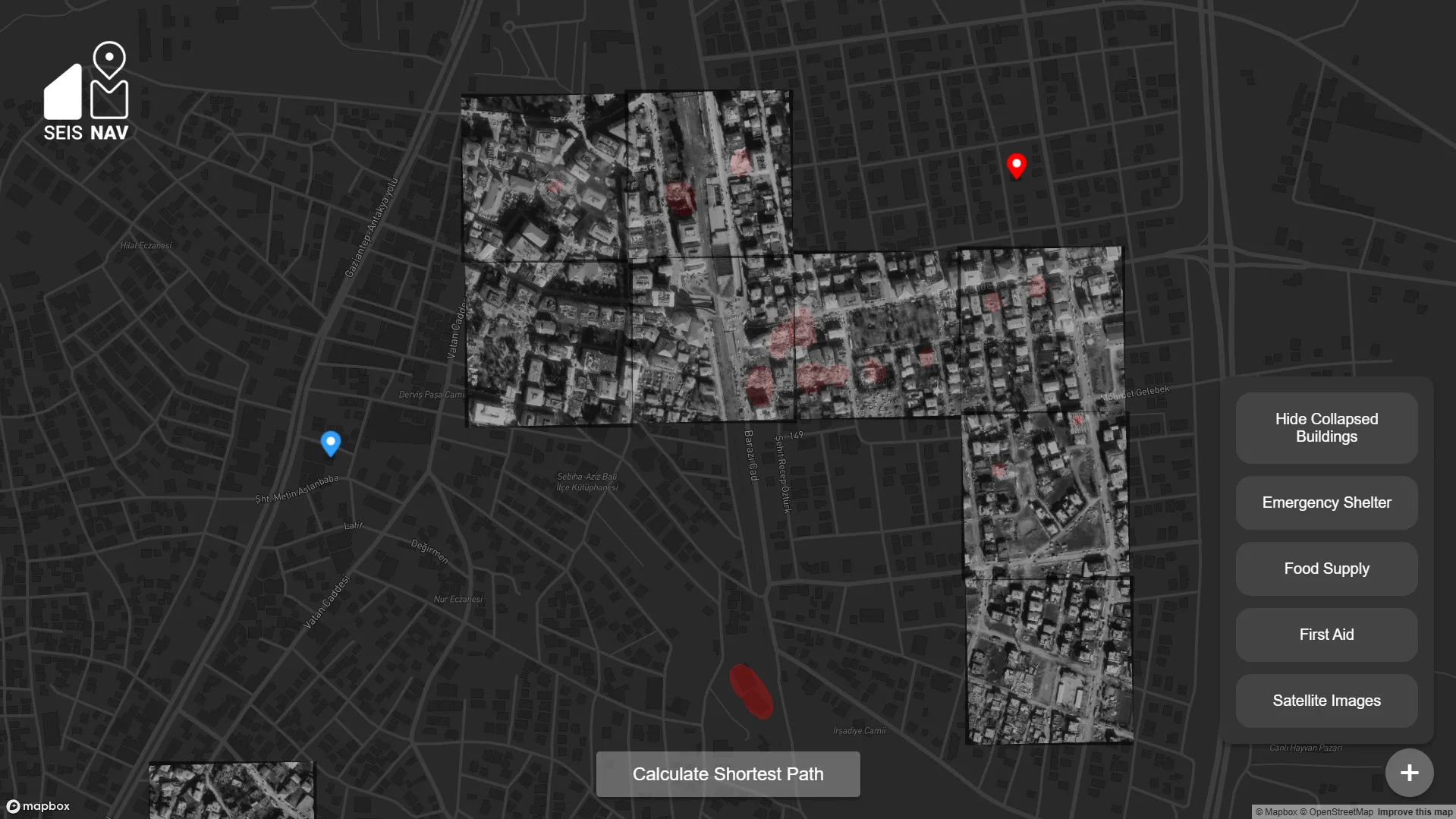
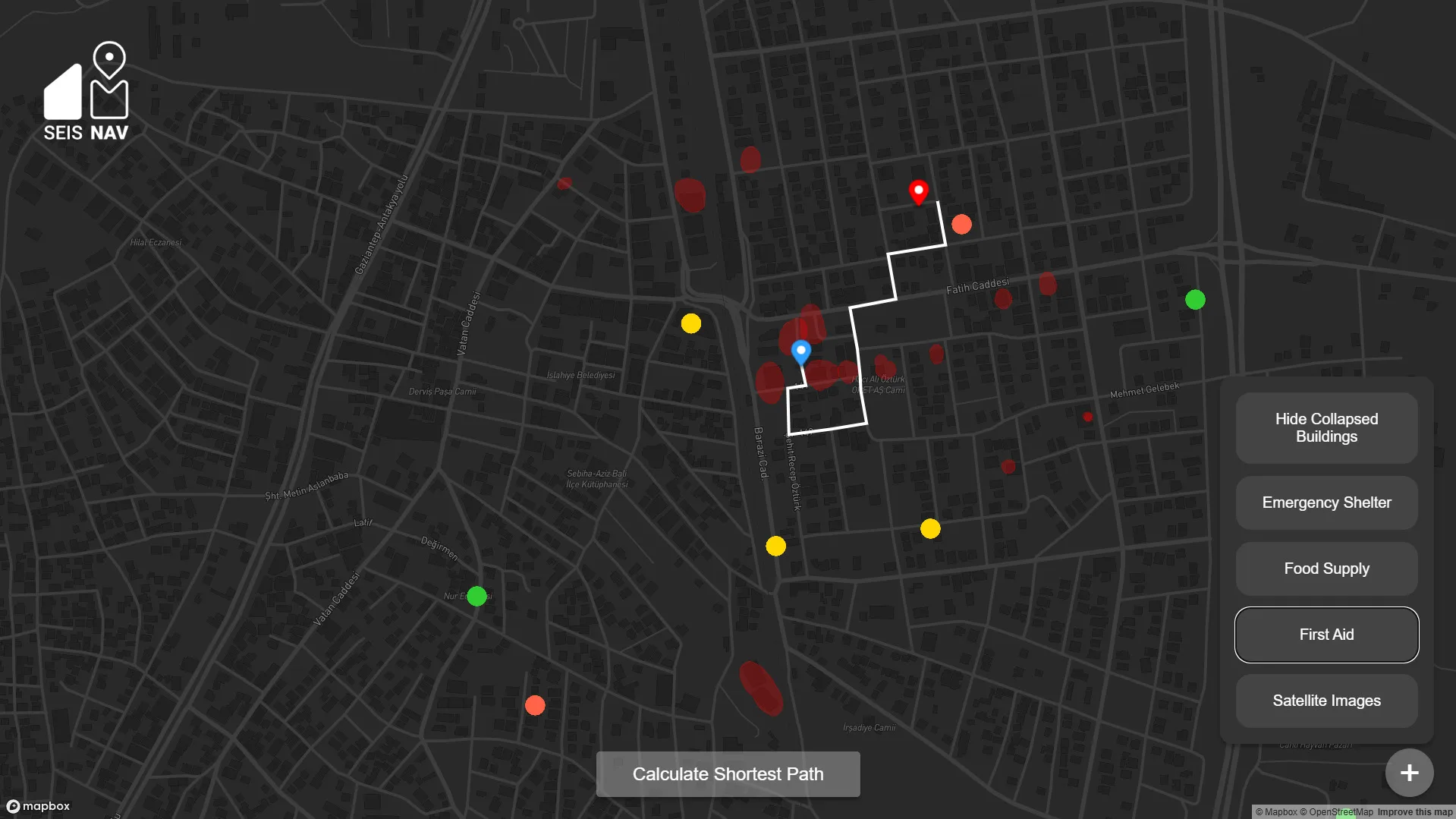
Routing: ML-derived collapse masks are overlaid on OpenStreetMap road networks with emergency infrastructure layers (hospitals, fire stations, emergency routes). Turf.js computes adaptive safe paths around obstructed areas, recalculating as new imagery is processed.
Interface: Mapbox GL JS interactive map designed for disaster response teams, NGOs, and civil authorities — built to be operable under time pressure without specialist GIS training.
Stack
Python · Roboflow · Mapbox GL JS · Turf.js · OpenStreetMap · MAXAR Satellite Data
Result
A working disaster response platform delivering building collapse detection and adaptive safe routing from satellite imagery. Demonstrated on 2023 Turkey earthquake data with 67.5% mIoU across five damage classes.
Team: Michele Cobelli, Bradley Manucha, Abdellah Choufani, Ertuğrul Akdemir