IAAC MaAI Programme, Barcelona · Jan–Jul 2025
Problem
Buildings account for 40% of global carbon emissions. Climate simulation can reduce this, but it requires specialist tools and expertise that most architecture teams don't have in-house. Generative AI is increasingly used for conceptual design — but produces outputs with no climate context, creating a gap between design intent and performance reality.
My Contribution
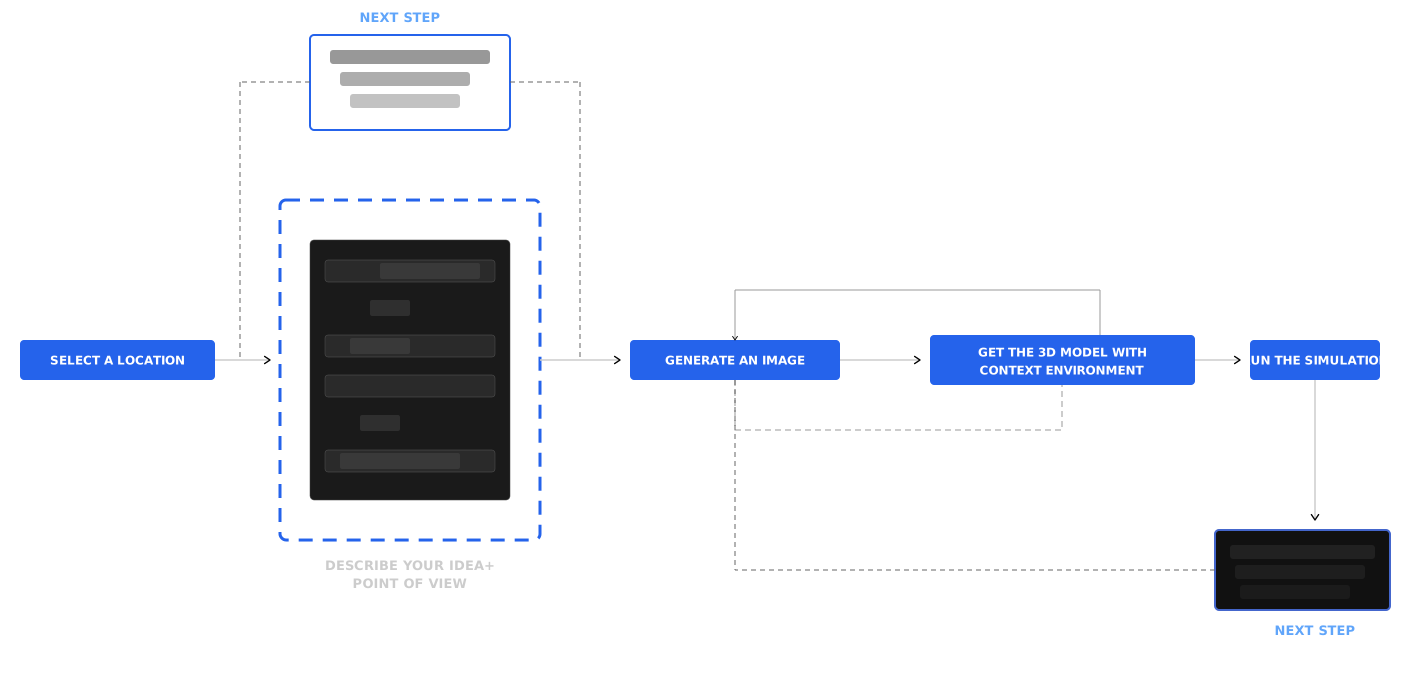
I built the geospatial and 3D data transformation pipelines: OSM-based urban context alignment, image-to-3D model preprocessing and conversion via Trellis API, and automated solar radiation simulation orchestrated through RhinoCompute. I also designed the pipeline architecture connecting LLM prompt enrichment, image generation, and spatial analysis into a single automated workflow.
Technical Approach
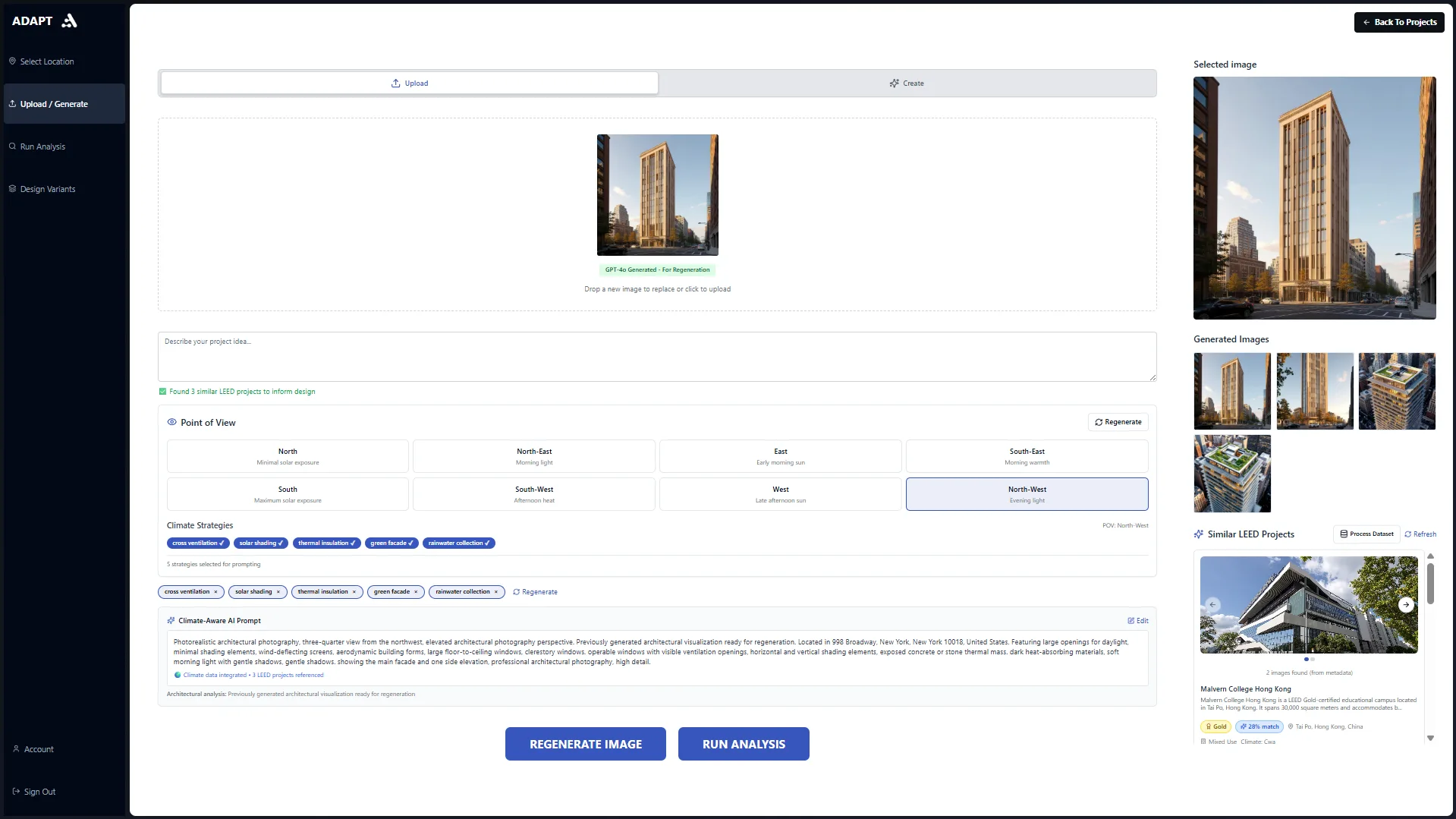
LEED knowledge integration: Data from certified sustainable projects was scraped and structured into a graph database for retrieval-augmented prompt enrichment. This ensures image generation outputs reflect real building performance characteristics, not generic architectural aesthetics.
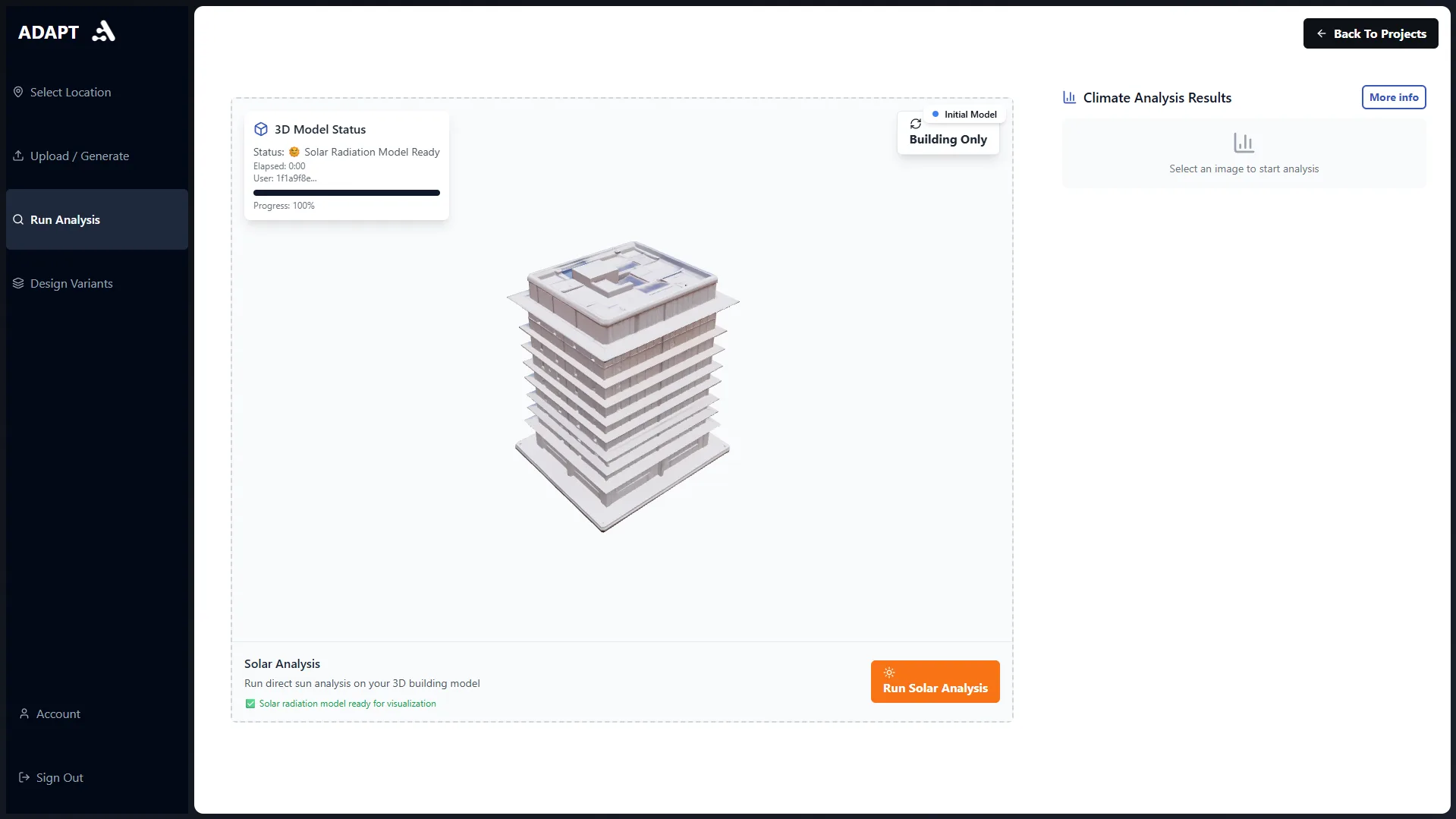
Image-to-3D pipeline: AI-generated images are preprocessed into mesh-ready format and converted to 3D architectural geometry via the Trellis API. Getting usable geometry from AI image output required significant preprocessing work — the raw outputs don't conform to architectural geometry constraints without it.
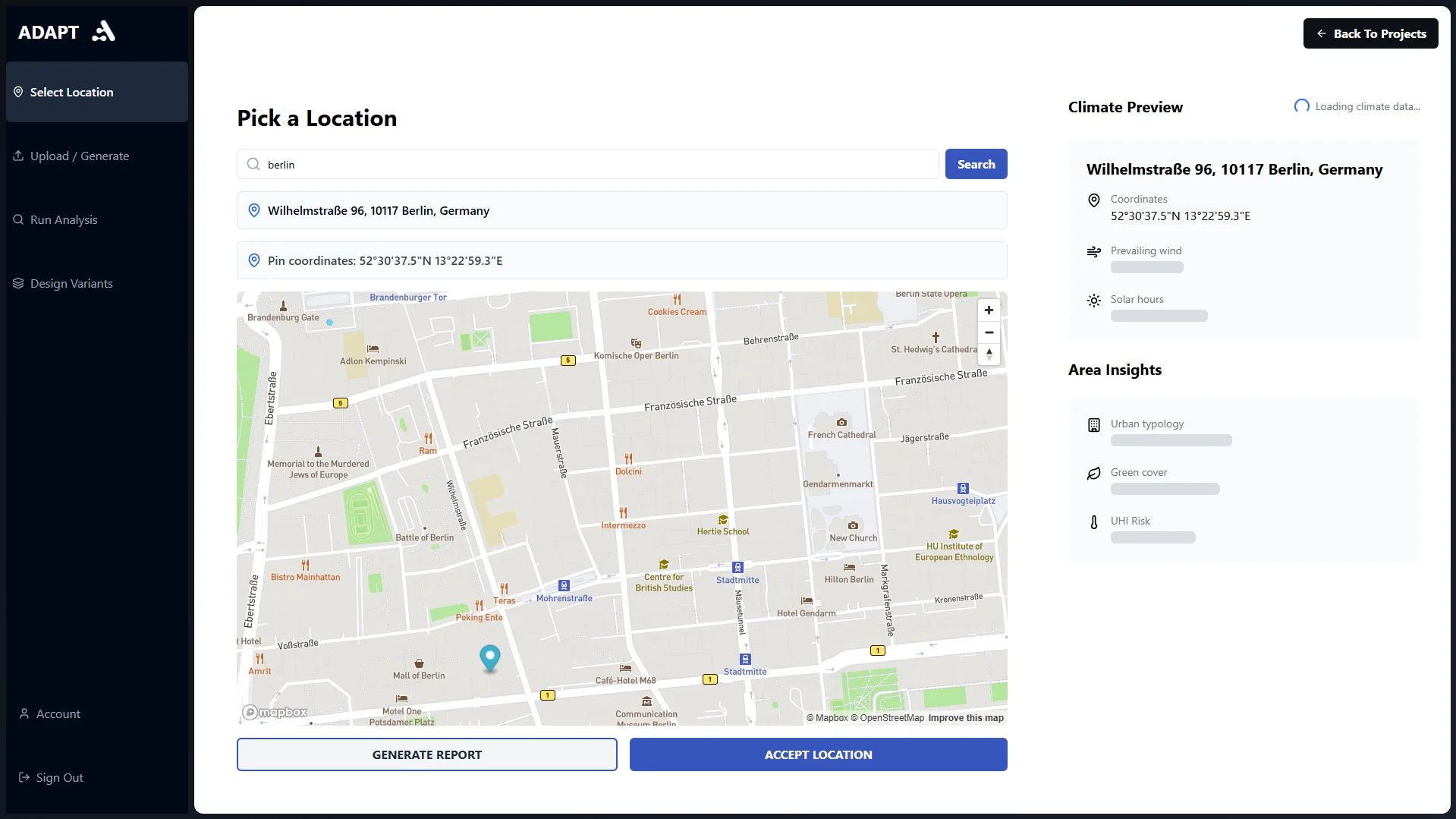
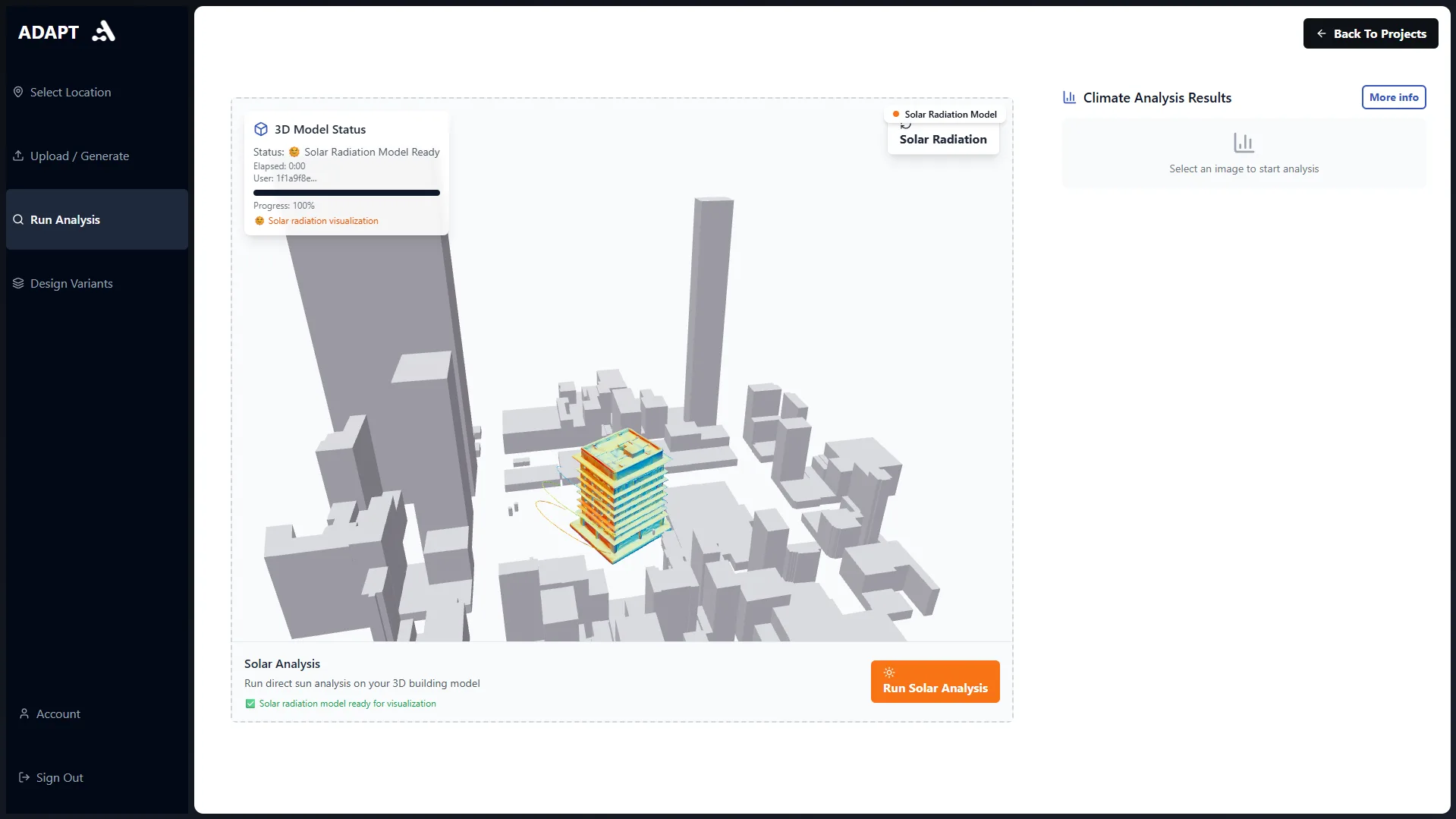
Geospatial alignment: OSM data places generated models in accurate site context. RhinoCompute runs solar radiation simulation on positioned models without requiring manual 3D software intervention, enabling non-specialist users to get climate analysis output.
Data pipeline: Supabase stores user sessions and project state. Python orchestrates the full transformation chain from location input through to climate analysis output.
Stack
Python · RhinoCompute · Trellis API · Supabase · OpenStreetMap · LangChain · LlamaIndex · RAG pipeline
Result
End-to-end platform from location selection to climate-validated 3D model output, demonstrated live at IAAC. Automated a workflow that typically requires three separate specialist tools and significant manual data transfer between them.
Team: Bradley Manucha, Abdellah Choufani, Michele Cobelli, Ertuğrul Akdemir